Showing posts with label News. Show all posts

CNN’s African Voices to feature Nigerian Screen Goddess: Omotola Jalade Ekeinde

...as she talks about her rise to fame, upbringing and her passion for activism. 

Airs Friday: 10 January at 0930; Saturday: 11 January at 1630; Sunday: 12 January at 1000 & 1930; Monday: 13 January at 1130 & 1830; Tuesday: 14 January at 0630

Vladmir Duthiers, CNN Correspondent and Omotola Jalade Ekeinde during  CNN Exclusive Interview recently

This week, one of Nigeria’s top actresses, singer, television star and philanthropist, Omotola Jalade Ekeinde, will feature on African Voices, CNN International’s weekly half-hour programme highlighting Africa's most engaging personalities.

The interview, with CNN correspondent, Vladimir Duthiers, will feature Omotola AKA ‘Omosexy’ as she talks about her upbringing, career achievements, passion for activism and future plans.


Vladmir Duthiers, CNN Correspondent and Omotola Jalade Ekeinde during  CNN Exclusive Interview recently

Popularly referred to as the Queen of Nollywood, Omotola is not only an Icon in the Nigerian entertainment industry; she is also a UN ambassador and activist with Amnesty International. In 2012, Omotola was awarded the Black Entertainment Film Fashion Television and Arts (BEFFTA) Icon, a special honorary award, in recognition of her contribution to the film industry in Africa, Europe and globally.

She tells CNN: “I've reached a point in my life where I’ve realized I have to leave something. I have to have a legacy. I decided I will be an activist for Africa. My experience with the UN and other humanitarian organisations inspired me to want to speak out and say more and there's so much you can just say with words. This was my motivation for singing.”

Omotola is the first Nigerian with her own reality TV show, tagged “Omotola: The Real Me”, she was also named one of the most influential people in the world by Time Magazine in the annual Time 100 List in 2013.


For more information, viewers can visit www.cnn.com/africanvoices; the show’s Facebook page: www.facebook.com/cnnafricanvoices and on Twitter: @africavoicesCNN



CNN INTERNATIONAL STRENGTHENS AFRICA COMMITMENT

CNN INTERNATIONAL STRENGTHENS AFRICA COMMITMENT

 ‘African Start-Up’ To Shine Spotlight On African Sme Entrepreneurs


 CNN International today announced that it is further cementing its long-standing commitment to the African continent with the launch of a new programming strand.

‘African Start-Up’ joins ‘African Voices’, ‘CNN Marketplace Africa’ and ‘Inside Africa’ as the latest addition to the leading international news network’s programming output looking at the events that are shaping the African continent and the people defining the African story.

Deborah Rayner VP and Managing Editor Europe, Middle East & Africa, CNN International, said:  “As the leading brand on the continent we are proud to continue finding new ways to tell the African story, in all its many dimensions, to our international audiences. We look forward to this new strand resonating both with African viewers and with viewers around the world. Africa is an important region for us as a global network, and ‘African Start-Up’ joins a strong stable of great programming.”

The new series, airing as a weekly segment and then bi-monthly as a half hour special,  follows several SME (small and medium-sized enterprise) entrepreneurs in various African countries to see how they’re working to make their dreams become reality.  It explores how they generate their ideas, formulate business plans, raise capital and distribute their products. The entrepreneurs take viewers through their daily challenges, charting both the setbacks and the opportunities that exist for those with the vision and creativity to try something new.

About CNN in Africa:
CNN is the leading international news brand in Africa according to EMS Africa (July 2012) and operates four bureaux across the continent delivering a diverse range of news content to its international audiences around the world.
Its programming remit for Africa dates back to 1999 when it launched ‘Inside Africa’ and has since then expanded with the launches of ‘African Voices’ and ‘CNN Marketplace Africa’ and now ‘African Start-Up’.

CNN has invested for 18 years in the CNN MultiChoice African Journalist Awards, the most prestigious and respected award for journalists across the African continent. Its objective is to reinforce the importance of the role of journalists in Africa's development and to reward, recognise and encourage journalistic talent across all media disciplines.

About ‘African Start-Up’
‘African Start-Up’ airs each Wednesday in ‘Global Exchange’ at 1600 GMT / 1700 WAT / 1800 SAST / 1900 EAT on CNN International.
Every two months, viewers will be able to catch up with all the segments in a 30 minute special.
A dedicated CNN website www.cnn.com/africanstartup encourages user participation, and serves as a forum for ideas.
The weekly segments debut from this month, with the first half hour special set to air in January 2014.

Idris Elba on playing Mandela: I wanted to do an ‘interpretation’ not an ‘impression’

Idris Elba on playing Mandela: I wanted to do an ‘interpretation’ not an ‘impression’


By Mick Krever, CNN

When Idris Elba was cast as Nelson Mandela, he decided he was not going to try to do an impersonation of the revered South African president.

“It’s a big ask for the audience to watch myself play Mandela,” Elba told CNN’s Christiane Amanpour on Tuesday. “I don’t look anything like Mandela; I’m considerably younger than the older Mandela.”

“So it was important that I didn’t do an impersonation of any actor, or Mandela himself, but sort of an interpretation.”

He purposefully did not watch previous portrayals of Mandela, like Morgan Freeman’s performance in 2009’s “Invictus,” lest he be influenced by them.

Elba, most famous for his roles in the TV series “The Wire” and “Luther,” stars in “Mandela: Long Walk to Freedom,” a biopic based on the autobiography.

It has set box office records in South Africa; it had its premiere in London last week on the very night Mandela died.

Indeed, Elba and the a producer on the film, Anant Singh, were forced to announce Mandela’s passing to the audience just after the credits had rolled.

“It was an awful feeling,” Elba said. “There was an audible gasp in the room; it was an incredible moment.”

The film is ten years in the making, and began with letters written to Mandela by Singh, who also spoke with Amanpour.

It’s a “huge responsibility as a South African,” Singh said.

In order to do the autobiography justice, he said, they decided that they had to tell “the full story,” from young boy to old man.

“He’s got such a big life, and such an epic life, that to try and cut that canvas into a two hour, 20-minute film was a huge challenge.”

The solution they came to was use as a thread Mandela’s often fraught relationship with his second wife, Winnie.

The filmmakers also decided that telling the “full” story meant not painting a perfect portrait, but including the man’s flaws, like his initial endorsement of violent uprising, and later familial struggles.

In order to understand “the man that’s sanctified, that we all love – the silver hair, the fist-pumping Mandela,” Elba said, one must understand what he sacrificed, and that includes his family.

“He is a human being, and I think you have more respect for him if you understand the journey he’s taken to the great man that we know and love.”

Singh said that that is what Mandela would have wanted.

“I’ve spent a lot of time with him, as you know, over the years. He had said to me, ‘I had have weaknesses and I have strengths. I am like an everyman. Show me for my strengths and weaknesses.’”

Elba said that he hoped that apart from the broad strokes of Mandela’s “legacy and ideals,” he hoped audience members would take away personal lessons from the film.

“My daughter is 11,” Elba said. “I’d love for her to see this film and understand that every individual can make an effort and can force change. Even the smallest amount of inspiration can force some sort of change.”

American Ambassador In South Africa Describes His Teenage Fight Against Apartheid

 American Ambassador In South Africa Describes His Teenage Fight Against Apartheid


By Mick Krever, CNN

The anti-apartheid movement was not just a South African struggle.

For the U.S. ambassador in South Africa, Patrick Gaspard, the anti-apartheid struggle he was involved in as a teenager felt like “Sisyphus pushing that rock up the hill,” he told CNN’s Christiane Amanpour on Monday.

“It wasn’t clear whether our actions would really make a difference,” he told Amanpour in Johannesburg.

Americans joined activists the world over in pushing their countries to levy sanctions on the apartheid government in South Africa.

U.S. President Ronald Reagan was against those sanctions, even using his veto at one point to block them.

“We you’re a kid, when you’re a teenager, and the president of the United States is saying this is the way we ought to go, it’s hard to be clear that you could be successful,” Gaspard said.

Gaspard said that he himself cut school in order to attend a demonstration – teasing that he hoped his mother wasn’t watching the broadcast lest she find out.

“It taught many of us that collective mattered, and being an engaged part of our democracy really was impactful as well.”

And that impact, he said, was large indeed.

“Nelson Mandela himself not only said that the sanctions were critical, but even once he was released he asked the United States and other governments to continue to maintain the sanctions because he thought they gave him real leverage in the negotiations.”

The apartheid regime, he said, “understood that they were in a ditch” if they didn’t change their ways.

Thirty years after he attended his first anti-apartheid protest Gaspard is an American ambassador. And the country he now lives in is trying to find its way forward, after nearly two decades of rule by the African National Congress.

“Clearly while the ANC is the dominant party in this country, there are other voices that are asking lots of questions and making alternate proposals about the future of this country.”

“It’s a debate that I’m looking forward to continue to engage in,” he said diplomatically.

On Tuesday, world leaders are set to gather in South Africa to celebrate Nelson Mandela.

“People are out there not in a somber mood but in a celebratory mood,” he said.

“They are out there saying this man did incredible things and together we’re going to continue to carry forth that legacy. You’re going to see hundreds of thousands of people in that spirited exuberance.”


Mandela Articulated Cause With ‘Exquisite Dignity’ But Wasn’t Just ‘Mister Nice Guy,’ Says Fellow Anti-Apartheid Fighter

Mandela Articulated Cause With ‘Exquisite Dignity’ But Wasn’t Just ‘Mister Nice Guy,’ Says Fellow Anti-Apartheid Fighter

By Mick Krever, CNN

Nelson Mandela did not “create the culture” that ended apartheid, a fellow freedom fighter told CNN’s Christiane Amanpour on Friday, but he carried the cause to success than anyone else could have.

“People somehow make it sound that he was ‘Mister Nice Guy’ who brought us all together and got rid of hatred in our hearts and led our country to freedom,” Albie Sachs said. “It just wasn’t like that at all.”
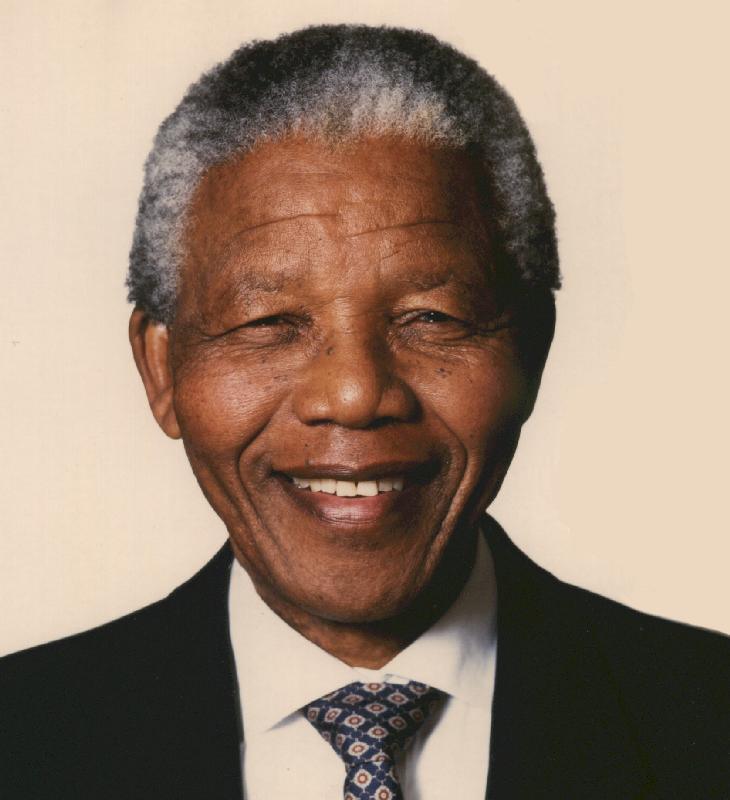
Nelson Mandela

“He was at the crest of a popular wave; something very deep in our society,” he said. “And he articulated more beautifully – with more exquisite dignity and precision and a mixture of great gravitas with lots of humor – something that we were all aching of, and ultimately we achieved in our new constitution.”

Sachs was in the 1960s one of the many white South Africans who not hated apartheid, but struggled against it, often at great cost.

He worked with Mandela in the 1960s, and then spent six painstaking years with Mandela drafting  a constitution that would become the cornerstone of the new South Africa.

Mandela later appointed him to the Constitutional Court of South Africa.

“Like so many South Africans, we met through the struggle,” he said.

Sachs led “a group of four young white people to sit on benches marked ‘non-whites only’ in the general post office in Cape Town.”

He was himself a political prisoner, where he was subjected to torture, and he lost an arm and sight in one eye when he was the victim of a car bomb while in exile in Mozambique.

“The hardest moments for me, in fact, were interrogation, sleep deprivation, collapsing on the floor,” he said.

“The bomb was terrible; I lost an arm, but it was only an arm,” he said. “They tried to kill me and I survived, and I felt somehow immune.”

Years later, when Mandela approached the apartheid government about negotiating an end to white minority rule, Sachs was there.

“It wasn't just the wonderful Mandela meeting the wise [former President F.W.] de Klerk, sitting around the table and doing a deal,” he said. “We had breakdowns; we have roving mass action; there were massacres.”

But they never lost sight of the end goal: A South Africa where everyone could live together.

“We had to look into each other's eyes. We had to understand each other very well. And we finally, we got this very comprehensive constitution that's held up as a model to the world.”

Yes, South Africa has problems, he allowed, and no, the constitution alone is not solving those problems.

“But it's giving us a foundation for doing that,” he said. “The constitutional court is there; we have a very free press, a lively media; we have strong civil society, political parties that engaged with each other, elections that are free and fair.”

Those institutions live “beyond Mandela,” he said.

Now, as the world comes to grips with the reality that Mandela has died, South African solidarity is higher than ever.

It is bolstered, he said, by the “thousands and millions” for strove for freedom, of which he was “just part.”

“I think it's that solidarity that's expressing itself today, this evening in South Africa, where people are celebrating and dancing and singing when, in other parts of the world they might be with tears and dressed in black.”


“South Africans are expressing a sense of joy that we are in a country that produced Nelson Mandela, who's become a hero to the whole world.”

Mandela’s Closest Confidant: He Taught Us To Be ‘A Forgiving Nation’

Mandela’s Closest Confidant: He Taught Us To Be ‘A Forgiving Nation’

By Mick Krever, CNN

In his first interview since Nelson Mandela’s death, Cyril Ramaphosa – the late president’s closest confidant during the negotiations that brought an end to apartheid – said that the man known by his clan name of Madiba was “nearly everything to many South Africans.”

“He's been a father of the nation, the builder of the South African new nation,” he said. “And he has been a mentor, a comrade, a friend, a reconciler.”

Ramaphosa is now deputy leader of the African National Congress. It is no secret that he was Mandela’s preferred successor when he left office in 1999, and Ramaphosa may yet become president of South Africa one day.

When Mandela was still in prison, during the 17 years that he would eventually serve, the future president decided to reach out unilaterally to the apartheid government.

“Whilst he was in prison, he saw the conflict rising and rising on an annual basis between the oppressor and the oppressed,” Ramaphosa said.

The only way the cycle could be ended, Mandela decided, was through negotiations with the hated regime.

“And he reached out to them. He reached out to [South African President] P.W. Botha without even discussing it with his other colleagues in prison” or the exiled ANC leadership.

“And for some reason, he knew that they would trust him so much that they would know he would not be selling out or going out on a whim of his own.”

Botha was succeeded by F.W. de Klerk, who seemed more open to talks, but they were by no means a walk in the park.

“They were quite tough, and anybody who has negotiated with Nelson Mandela or against Nelson Mandela – I would have felt a great pity for them,” Ramaphosa said.

“Whatever he negotiated he made sure that he stuck to principle and he won the argument. But at the same time, he always gave an allowance to his counterparty to go away from the negotiating table having obtained some measure of victory or something that he can sell to his side.”

“So he was a negotiator par excellence.”

Ramaphosa was lead negotiator for the ANC, and says that there was so much violence at the time it was “a miracle” that a deal was reached.

“Nelson Mandela just stayed the course and said the victory for all our people – even those who will have departed – would be to bring an end to the nightmare of apartheid.”

And it really was a nightmare.

The regime’s will was “enforced through the jackboot, through removals, as they embarked on their social engineering,” he said.

“They moved people from where they had been born, where they had grown up, and moved them to the dusty, arid parts of the country.”

Ramaphosa and his family, too, were forcibly moved out of Johannesburg.

“Trucks would just arrive in the morning and just load up everything that you possessed, destroyed the houses, and you were just moved,” he said. “Because they were making way for white people to live peacefully without being disturbed by the presence of black people in a particular area.”

“Black people in South Africa knew no rights…They lost their property, they lost their dignity, and they also lost their lives.”

Mandela was able to overcome that reality and forgive “not only his jailers, but also his oppressors.”

He has taught all of South Africa to be “a forgiving nation” and “walk along the path of reconciliation.”

“This is the moment when as we put him to rest, all of us as South Africans, will be saying, ‘Let us reconcile, let us transform our country to properly build it into the South Africa of Nelson Mandela's dreams.’”


Pirate attacks in West Africa to double in 2014

Pirate attacks in West Africa to double in 2014


The number of pirate attacks in the Gulf of Guinea could double next year if governments do not act to protect off-shore assets, according to Paramount Group, Africa’s largest privately owned defence and aerospace business.

There have been over 360 attacks on merchant shipping this year and without action by West African governments this could rise to over 700 incidents in 2014.  This could see an average of two attacks every day of the year.

However, piracy threatens more than just oil and gas assets, criminal gangs at sea are responsible for drug trafficking, arms smuggling, dumping of toxic waste, illegal bunkering and illegal fishing.

This is in addition to the problems caused by the profits from piracy that finance other criminal activity such as terrorism and human trafficking  that have a significant human and financial cost.

James Fisher, CEO of Paramount Naval Systems said: “As stronger counter-piracy measures have developed in East Africa, criminal organisations have come to see coastal assets in West Africa as soft targets. The result is that the waters of the Gulf of Guinea are now the most dangerous in Africa for merchant shipping.

“West African nations are rapidly developing their oil and gas infrastructure to capitalise on existing assets and exploit new offshore discoveries. These assets can serve as the driver of long-term economic development in these countries, boosting industry, creating thousands of jobs and bringing in billions of dollars of foreign investment.

“Unless it is tackled quickly and effectively, piracy could do serious damage to Nigeria’s oil and gas industry, slowing development for years to come.

“The solution is not to seek international help to solve these African problems, but to build African solutions to them. The development of a strong African shipbuilding industry means it is possible for African nations to find African solutions to the threat of piracy.